Semi-Trailer Maintenance Checklist for Fleets in Indianapolis, IN
Keeping a fleet of semi-trailers road-ready requires consistent semi-trailer maintenance, and for fleets operating in and around Indianapolis, IN, the stakes are especially high. Indianapolis, IN, sits at the crossroads of I-70 and I-465, two of the busiest freight corridors in the Midwest. High traffic volume, freeze-thaw road cycles in winter, and constant DOT roadside inspection pressure mean that skipping preventive maintenance is a risk no fleet manager can afford. This checklist walks through each major system to help your fleet stay safe, compliant, and moving.
Why a Preventive Maintenance Schedule Matters for Indianapolis, IN, Fleets
A consistent PM schedule helps fleets avoid costly breakdowns and DOT out-of-service orders. Indiana State Police conduct unannounced roadside inspections at weigh stations along major corridors, including I-70, and violations can put a trailer out of service immediately. For fleets moving freight through Indianapolis, IN, and connecting to markets in Chicago, Cincinnati, and Louisville, an out-of-service order is not just a safety problem; it is a revenue problem.
Every trailer also requires a DOT inspection at least once a year under federal law. Building a year-round semi-trailer preventative maintenance routine around that baseline keeps inspections from becoming surprises.
Semi-Trailer Maintenance Checklist by System
Structured semi-trailer preventative maintenance in Indianapolis, IN, covers several key systems that inspectors and road conditions will both test. Work through each category on a regular basis and document everything in your maintenance logs.
Brake System
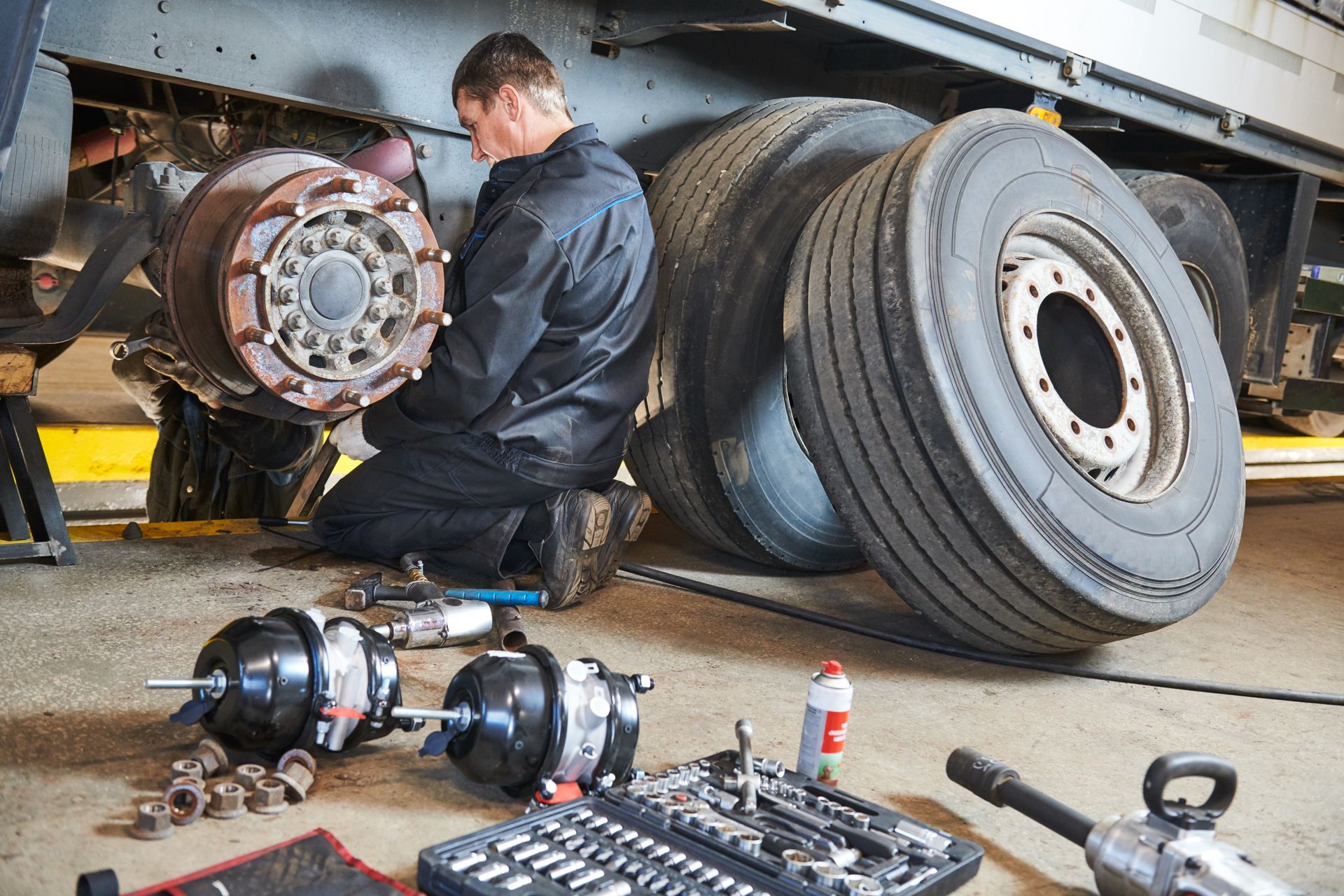
Brakes are the most scrutinized system during any DOT inspection. Under the 2025 CVSA Out-of-Service Criteria, brake defects, including brakes out of adjustment, air system leaks, and inoperative emergency brakes, result in immediate out-of-service orders.
Check these items at every PM interval:
- Inspect brake lining thickness and replace when worn beyond manufacturer specs.
- Test the air system for leaks at all connections and glad hands.
- Verify brake adjustment on all axles meets federal limits.
- Inspect brake chambers, slack adjusters, and air lines for cracks or wear.
- Confirm emergency brake function before every dispatch.
Suspension and Axle Semi-Trailer Maintenance
Indiana's freeze-thaw cycles put extra stress on suspension components. Cracked springs, broken U-bolt plates, and excessive steering wear are all grounds for an out-of-service order.
- Inspect leaf springs, hangers, and equalizers for cracks or missing components.
- Check U-bolts for proper torque and signs of fatigue.
- Inspect axle seals for leaks and replace as needed.
- Examine wheel ends for bearing wear or heat discoloration.
Tires and Wheels
Tire condition is among the first things inspectors check. Low tread depth, exposed cords, mismatched sizes, and cracked or missing lugs are all immediate violations.
- Measure tread depth on all tires and replace any at or below the DOT minimum.
- Inspect sidewalls for bulges, cuts, or road damage.
- Confirm proper inflation on all tires, including duals.
- Check lug nuts for correct torque.
Lighting and Electrical
All exterior lighting must always function correctly. Indiana's long winter nights and frequent fog make reliable lighting critical for safe highway operation.
- Test all marker lights, brake lights, and turn signals.
- Inspect wiring harnesses and connectors for corrosion or chafing.
- Verify the ABS malfunction lamp works properly.
- Check reflective tape along trailer sides and rear for condition and coverage.
Kingpin and Coupling Components
A worn or cracked kingpin can fail without warning. Include coupling checks in every semi-trailer maintenance interval.
- Measure kingpin diameter and check for excessive wear.
- Inspect the kingpin base plate for cracks or deformation.
- Verify the locking mechanism engages fully and releases cleanly.
- Lubricate all coupling contact surfaces per manufacturer intervals.
Roof, Doors, and Seals
For dry van and refrigerated trailers common on Indianapolis, IN, distribution runs, cargo integrity depends on tight seals and functional doors.
- Inspect roof panels for punctures, delamination, or water intrusion.
- Check door seals and gaskets for tears or compression failure.
- Verify door hinges, locking rods, and handles operate without binding.
- Inspect the trailer floor for soft spots or structural damage.
Landing Gear and Frame
- Inspect landing gear legs for straightness and proper crank function.
- Check main frame rails and crossmembers for cracks, corrosion, or collision damage.
- Inspect underride protection for secure attachment and structural integrity.
Indiana DOT Compliance and Inspection Tips
Annual inspections are required for all commercial vehicles over 10,001 lbs. GVWR operating in Indiana. The Indiana State Police conduct unannounced inspections at weigh stations along I-65, I-70, and I-80/I-90, as well as through roving highway patrols. Fleets with detailed semi-trailer maintenance records can resolve disputed findings more efficiently when a unit gets pulled over.
Key compliance practices for Indianapolis, IN, area fleet managers:
- Maintain a file for each trailer with dated inspection reports and repair invoices.
- Log all brake adjustments, lighting repairs, and tire replacements with mileage or date.
- Schedule annual DOT inspections before high-volume shipping seasons such as fall harvest and pre-holiday freight surges on I-70.
How Often Should a Semi-Trailer Receive Preventive Maintenance?
Most fleet operators schedule inspections every 90 days or 25,000 miles, whichever comes first. Refrigerated trailers and those running aggregate loads often need shorter intervals. A qualified trailer mechanic can help determine the right schedule for your operation.
What Are the Most Common Reasons Semi-Trailers Fail DOT Inspections?
Brake adjustment violations, lighting defects, and tire issues are consistently the top causes of out-of-service orders in Indiana. Keeping brakes properly adjusted and all lights fully operational before every dispatch addresses the majority of inspection failures before they happen.
Schedule Your Next Maintenance Inspection With Bond Trailer Service
A well-maintained fleet protects your drivers, your cargo, and your operating authority. Bond Trailer Service has provided semi-trailer maintenance and repair services for over 30 years from a full-service shop with six bays and an experienced team of mechanics.
Call (317) 788-9405 or contact the shop online to schedule your service. Learn more about the full range of semi-trailer repair and maintenance services available at the shop. Read what other fleet operators have to say on Google: Bond Trailer Service.